
Potatoes Seeding: A Complete Guide to Planting Potatoes Successfully
Potatoes are one of the most widely grown food crops in the world, and successful production starts with proper potatoes seeding. Choosing healthy seed potatoes, preparing the soil correctly, selecting the right planting time, and maintaining suitable spacing can have a major impact on plant growth and potato yield.
Whether you are growing potatoes in a home garden, small farm, or larger agricultural field, understanding the fundamentals of potato seeding can help you produce healthier plants and better-quality tubers.
This guide explains what potatoes seeding is, how to seed potatoes, when to plant them, how deep to plant seed potatoes, proper spacing, watering requirements, and common mistakes to avoid.
What Is Potatoes Seeding?
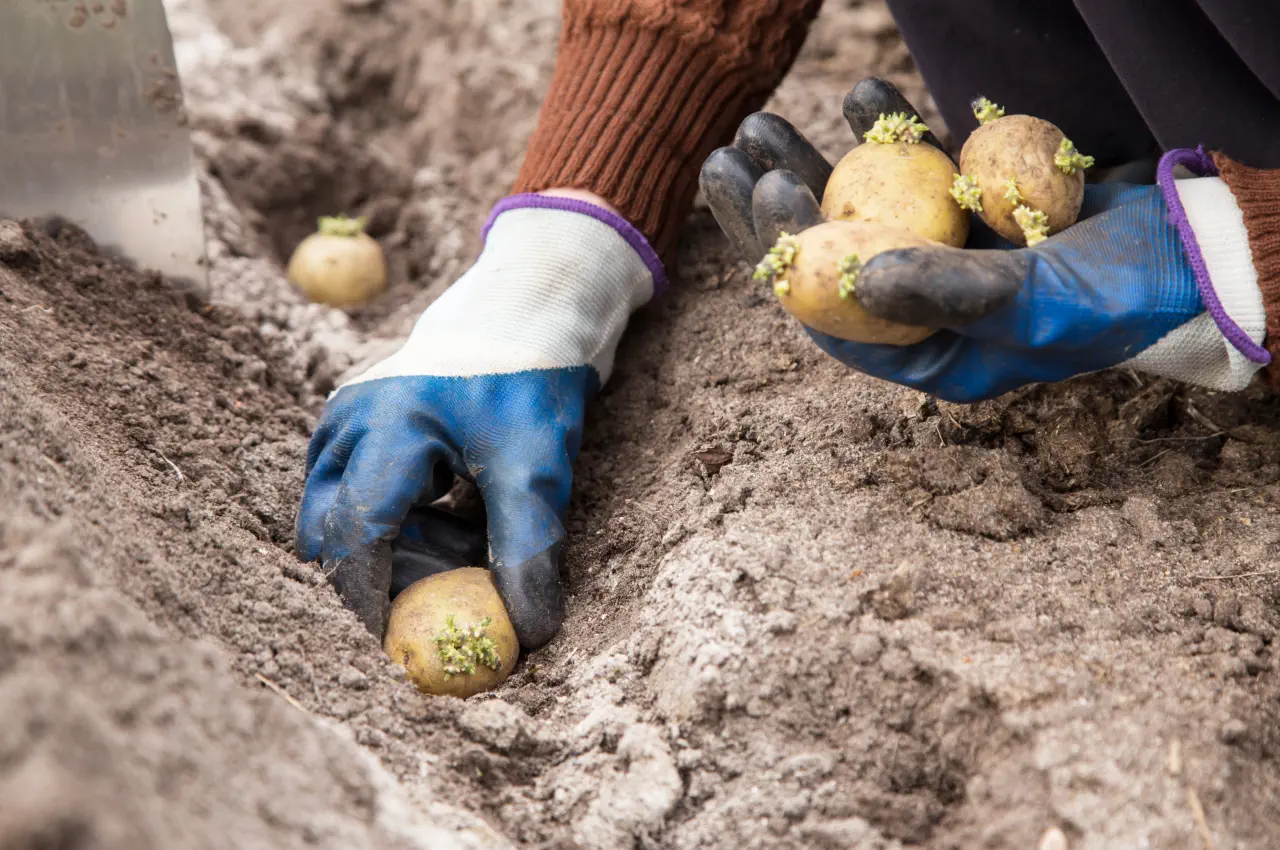
Potatoes seeding refers to the process of planting seed potatoes or pieces of seed potatoes in prepared soil so they can develop into new potato plants.
Unlike many crops that are commonly grown from botanical seeds, potatoes are usually propagated using seed tubers. A seed potato is a healthy potato or a cut piece of a potato that contains one or more growing points, commonly called eyes.
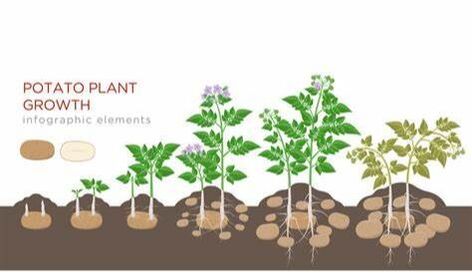
Once planted under suitable conditions, the eyes sprout and produce stems and leaves above the soil. Underground, the plant develops new tubers that eventually become the potatoes harvested for food.
How Does Potato Seeding Work?
The potato planting process is relatively simple, but several factors influence successful growth.
The basic process is:
- Select healthy seed potatoes.
- Prepare loose, well-drained soil.
- Cut large seed potatoes into suitable pieces if necessary.
- Allow freshly cut pieces to form a protective skin.
- Plant the seed pieces at the correct depth.
- Maintain appropriate spacing between plants.
- Water the soil consistently without creating waterlogged conditions.
- Hill or mound soil around growing plants.
- Monitor the crop for pests and diseases.
- Harvest when the potatoes reach the desired maturity.
Following these steps gives potato plants a strong start and creates favorable conditions for tuber development.
How to Choose Seed Potatoes
Choosing good seed potatoes is one of the most important parts of successful potatoes seeding.
Use seed potatoes that are:
- Healthy and disease-free
- Firm and not rotten
- Free from severe bruising
- Suitable for your growing climate
- Purchased from a reliable seed supplier when possible
- Equipped with healthy eyes or sprouts
Avoid planting potatoes that show significant rot, mold, or signs of disease. Poor-quality seed material can result in weak plants and reduced production.
For commercial production, certified seed potatoes are often preferred because they are produced under standards designed to reduce the risk of seed-borne diseases.
Can You Plant a Whole Potato?
Yes, a small potato can often be planted whole if it has healthy eyes. Larger potatoes can generally be divided into pieces, with each piece containing at least one or more healthy eyes.
When cutting seed potatoes, avoid making pieces that are too small. Each piece needs enough stored energy to support early plant development.
Freshly cut pieces can also be allowed to dry and form a protective layer before planting. This can reduce the risk of rotting in certain soil conditions.
When Is the Best Time for Potatoes Seeding?
The best planting time depends on your local climate and soil temperature.
Potatoes generally perform well during cool growing conditions. They can be sensitive to extreme heat, while frost can damage young shoots.
A useful general rule is to plant after the danger of severe frost has passed and when the soil has warmed enough to support active growth.
For many temperate regions, potatoes are planted during spring. In warmer regions, growers may have additional planting seasons depending on local temperatures and irrigation availability.
The ideal potato planting date is therefore different from one region to another. Local climate, variety, soil conditions, and expected frost or heat should all be considered.
How Deep Should You Plant Seed Potatoes?
Seed potatoes are commonly planted around 3 to 5 inches (7.5 to 12.5 cm) deep, although the exact depth can vary depending on soil type, moisture, climate, and planting method.
Planting too shallow can expose developing tubers to sunlight, while planting excessively deep can make emergence more difficult, especially in heavy soils.
As plants grow, additional soil can be gradually placed around their stems. This practice is commonly known as hilling.
What Is the Correct Potato Plant Spacing?
Proper spacing gives potato plants enough room to develop leaves, roots, and underground tubers.
A common guideline is approximately:
- Seed pieces: 8–12 inches apart
- Rows: 24–36 inches apart
- Planting depth: approximately 3–5 inches
The recommended spacing can vary depending on potato variety, available space, soil fertility, and whether potatoes are being grown for home use or commercial production.
For small gardens, growers can adjust spacing according to the available area while still allowing enough room for plants to develop.
How to Prepare Soil for Potato Seeding
Potatoes grow best in loose, well-drained soil that allows tubers to expand easily.
Before planting, prepare the soil by:
- Removing large stones and debris.
- Breaking up compacted soil.
- Adding suitable organic matter when needed.
- Creating a loose planting bed.
- Ensuring excess water can drain away.
Heavy or compacted soil can restrict tuber development and may result in misshapen potatoes.
A slightly acidic soil environment is often favorable for potatoes, but soil conditions should be assessed locally rather than relying on a single target value for every field or garden.
How Much Water Do Potato Plants Need?
Potatoes need consistent moisture, particularly during periods of active growth and tuber formation.
However, excessive watering can create problems. Waterlogged soil reduces oxygen around the roots and can encourage certain diseases and rotting.
A good approach is to keep the soil consistently moist without allowing it to remain saturated for long periods.
Water requirements depend on:
- Temperature
- Rainfall
- Soil type
- Plant growth stage
- Variety
- Irrigation method
Drip irrigation or carefully managed irrigation can help provide consistent moisture while reducing unnecessary water use.
What Is Hilling in Potato Production?
Hilling is the practice of placing additional soil around the base of potato plants as they grow.
It serves several purposes:
- Protects developing tubers from sunlight
- Provides additional space for tuber development
- Helps support the plants
- Reduces the chance of potatoes becoming exposed above the soil
Potatoes exposed to sunlight can develop green areas containing increased levels of glycoalkaloids, so keeping developing tubers covered is important.
Common Problems During Potatoes Seeding
Several problems can affect potato production from the beginning of the growing cycle.
1. Poor-Quality Seed Potatoes
Diseased, damaged, or weak seed potatoes may produce poor plant growth.
2. Planting in Cold or Waterlogged Soil
Cold, saturated soil can slow emergence and increase the risk of seed-piece decay.
3. Incorrect Plant Spacing
Plants that are too close together may compete for resources, while excessive spacing can reduce efficient use of growing space.
4. Inconsistent Irrigation
Periods of severe dryness followed by excessive watering can negatively affect plant growth and tuber quality.
5. Failure to Hill Plants
If developing tubers become exposed to sunlight, they can turn green.
6. Ignoring Pests and Diseases
Potatoes can be affected by insects, fungal diseases, bacterial diseases, and other crop problems. Regular crop monitoring can help identify problems early.
How Long Do Potatoes Take to Grow?
The time from planting to harvest varies considerably depending on the potato variety and growing conditions.
Some early varieties can be harvested relatively quickly, while main-season varieties may require considerably longer.
Temperature, water availability, soil fertility, disease pressure, and variety all influence maturity.
Instead of relying only on a fixed number of days, growers should observe the plant and follow the maturity characteristics associated with the specific variety they are growing.
When Are Potatoes Ready to Harvest?
Potatoes can be harvested at different stages depending on their intended use.
For young or “new” potatoes, harvesting can occur earlier while the tubers are still relatively small and their skins are delicate.
For mature storage potatoes, growers generally wait until the plants naturally begin to mature and the foliage declines. Mature potatoes usually have firmer skins that are better suited to storage.
After harvesting, potatoes should be handled carefully to reduce bruising and damage.
Potatoes Seeding for Home Gardens
Growing potatoes at home does not require a large farm.
You can grow potatoes in:
- Garden beds
- Raised beds
- Containers
- Large grow bags
- Suitable buckets or other planting containers
For container growing, choose a container with adequate drainage and sufficient depth. Fill it with suitable growing medium and plant seed potatoes according to the requirements of the variety.
As the plants grow, additional growing medium can be added around the stems, leaving enough foliage exposed for healthy growth.
Best Practices for Successful Potato Seeding
For better results, consider these practical tips:
Use healthy seed: Start with good-quality seed potatoes.
Prepare the soil: Make sure the soil is loose and well-drained.
Plant at the correct time: Use local weather and soil conditions to determine planting time.
Maintain spacing: Give plants adequate room for growth.
Manage water carefully: Avoid both severe drought and prolonged waterlogging.
Hill the plants: Keep developing tubers covered.
Monitor the crop: Regularly check for pests, diseases, nutrient problems, and unusual growth.
Harvest carefully: Avoid unnecessary cuts and bruises during harvesting.
Potatoes Seeding vs. Growing Potatoes From True Seeds
There is an important difference between traditional seed potato planting and growing potatoes from botanical seeds.
Most potato production uses seed tubers, because they provide a practical way to reproduce a known variety. True potato seeds, sometimes called botanical seeds, are produced by potato plants after flowering and can be used for propagation, but the resulting plants can differ genetically from the parent plant.
For most home gardeners and commercial growers interested in producing familiar potato varieties, seed tubers are the more common method.
Frequently Asked Questions About Potatoes Seeding
What is the best seed for planting potatoes?
Healthy, disease-free seed potatoes from a reliable source are generally preferred. Certified seed can be particularly useful for growers who want to reduce the risk of seed-borne diseases.
How many potatoes can one seed potato produce?
The number of potatoes produced by one seed piece varies with variety, seed quality, soil, weather, irrigation, fertility, and crop management. There is no single yield number that applies to every planting.
Can I grow potatoes from store-bought potatoes?
Sometimes store-bought potatoes can sprout and grow, but they may have been treated to reduce sprouting, and their disease status or variety suitability may be unknown. Seed potatoes specifically intended for planting are generally a more reliable choice.
How many eyes should a seed potato have?
When a large seed potato is cut into pieces, each piece should normally contain at least one healthy eye. Larger seed pieces with multiple healthy eyes can provide more stored energy for early growth.
How deep should potatoes be planted?
A common planting depth is approximately 3–5 inches, but the appropriate depth can vary according to soil type, climate, moisture, and planting method.
Do potatoes need full sun?
Potatoes generally perform best with plenty of sunlight during the growing season. Adequate light supports healthy foliage and helps the plant produce energy for tuber development.
Why do potatoes turn green?
Potatoes can turn green when tubers are exposed to light. Hilling or covering exposed tubers with soil helps prevent light exposure.
What is the easiest way to grow potatoes?
For beginners, using healthy seed potatoes, loose well-drained soil, adequate sunlight, correct spacing, and consistent moisture provides a straightforward starting point.